
Skip to content

Fraud Risk

WHAT IS

Fraud?

Fraud is a deliberate act of deception, typically carried out for financial gain or to secure some unfair or unlawful advantage. It involves intentionally misrepresenting facts, information, or intentions to deceive others. Fraud can take various forms and occur in different contexts, including financial transactions, business operations, personal interactions, and more.

WHAT IS

Fraud risk?

Fraud risk refers to the potential that an individual, organisation, or system might engage in deceptive or dishonest activities to achieve financial gain or other benefits. It involves the possibility of misrepresenting information, manipulating transactions, or exploiting vulnerabilities to deceive others. Organisations often assess and manage fraud risk to prevent or mitigate the impact of fraudulent activities.

WHAT IS A

Fraud Risk Assessment?

A Fraud Risk Assessment is a systematic process that involves identifying, evaluating, and understanding the potential risks and vulnerabilities within an organisation that could lead to fraudulent activities. It typically involves analysing various aspects of the organisation's operations, processes, and systems to determine where weaknesses or opportunities for fraud might exist. The goal of a Fraud Risk Assessment is to proactively identify and address areas where fraud is more likely to occur, enabling the organisation to implement controls and measures to prevent, detect, and respond to fraudulent activities effectively.

WHAT TYPES OF

Fraud risk exist?

(opens in new tab)

Asset Misappropriation(opens in new tab)

This involves the theft or misuse of an organisation's assets, such as cash, inventory, equipment, or intellectual property. Examples include embezzlement, theft, and inventory shrinkage.

(opens in new tab)

Financial Statement Fraud(opens in new tab)

This type of fraud involves deliberately misrepresenting financial information to deceive stakeholders. Examples include inflating revenues, understating expenses, and falsifying records.

(opens in new tab)

Corruption(opens in new tab)

Corruption involves the misuse of power or authority for personal gain. It includes bribery, kickbacks, extortion, and conflicts of interest. Corruption can occur internally or involve third parties.

(opens in new tab)

Cyber Fraud(opens in new tab)

With the increasing reliance on technology, cyber fraud involves unauthorised access to systems, data breaches, and online scams. Phishing, identity theft, and hacking are common cyber fraud tactics.

(opens in new tab)

Employee Fraud(opens in new tab)

Employee fraud is committed by individuals within the organisation. It can involve manipulating expenses, inflating reimbursements, and falsifying time records.

(opens in new tab)

Customer Fraud(opens in new tab)

Some customers may engage in fraudulent activities, such as providing false information to receive discounts, returning stolen merchandise, or making fake insurance claims.

(opens in new tab)

Healthcare Fraud(opens in new tab)

In the healthcare industry, fraud can involve billing for services not provided, submitting false insurance claims, and prescribing unnecessary treatments.

(opens in new tab)

Investment and Securities Fraud(opens in new tab)

This occurs when individuals or entities deceive investors by providing false or misleading information to manipulate securities prices or gain investment funds illegally.

(opens in new tab)

Mortgage and Real Estate Fraud(opens in new tab)

This type of fraud involves misrepresentation or deception in real estate transactions.

(opens in new tab)

Identity Theft(opens in new tab)

Identity theft occurs when someone gains unauthorised access to personal information to commit fraud, such as opening credit accounts or making purchases in the victim's name.

(opens in new tab)

Insider Trading(opens in new tab)

Insider trading involves trading securities based on non-public information about a company. It's illegal and can result in unfair gains for those with access to privileged information.

(opens in new tab)

False Claims(opens in new tab)

Organisations may make false claims to government agencies to receive payments or benefits. This often occurs in industries with government contracts or subsidies.

(opens in new tab)

Credit Card Fraud(opens in new tab)

This involves using stolen credit card information to make unauthorised purchases or withdrawals. It can occur through online transactions, point-of-sale terminals, or skimming devices.

(opens in new tab)

Charity Fraud(opens in new tab)

Some individuals or organisations may misuse charitable funds for personal gain, misrepresenting the intended use of donations or not using funds for their intended purpose.

(opens in new tab)

Tax Fraud(opens in new tab)

Tax fraud involves intentionally misrepresenting information on tax returns to reduce tax liability or claim false refunds.

WHO MUST CONDUCT A

Fraud Risk Assessment?

Fraud Risk Assessments are important for a wide range of organisations, regardless of their size or industry. Any entity that handles financial transactions, sensitive information, or valuable assets can benefit from conducting a Fraud Risk Assessment, including:

(opens in new tab)

Corporations(opens in new tab)

Large corporations often have dedicated internal audit or risk management teams that conduct regular Fraud Risk Assessments to safeguard against potential fraudulent activities.

(opens in new tab)

Small and Medium Enterprises (SMEs)(opens in new tab)

Even smaller businesses can be vulnerable to fraud, so conducting a Fraud Risk Assessment helps them identify and address potential risks.

(opens in new tab)

Nonprofit Organisations(opens in new tab)

Nonprofits handle donations and funds, making them susceptible to fraudulent activities. Conducting a Fraud Risk Assessment helps ensure transparency and accountability.

(opens in new tab)

Government Agencies(opens in new tab)

Government entities manage public funds and sensitive data, making Fraud Risk Assessment crucial to prevent financial mismanagement and corruption.

(opens in new tab)

Financial Institutions(opens in new tab)

Banks, credit unions, and other financial institutions conduct Fraud Risk Assessments to protect customer assets and sensitive financial information.

(opens in new tab)

Healthcare Organisations(opens in new tab)

Healthcare providers need to safeguard patient data and financial transactions, making Fraud Risk Assessments vital to maintain trust and security.

(opens in new tab)

Educational Institutions(opens in new tab)

Schools and universities handle financial transactions and student records, necessitating Fraud Risk Assessments to prevent misappropriation of funds and data breaches.

(opens in new tab)

Any Entity with Financial Transactions(opens in new tab)

Any organisation that handles financial transactions, both monetary and non-monetary, should consider conducting Fraud Risk Assessments to mitigate potential risks.

WHY SHOULD I CONDUCT A

Fraud Risk Assessment?

Conducting a Fraud Risk Assessment offers several important benefits for organisations:

Identify Vulnerabilities

A Fraud Risk Assessment helps identify areas within your organisation that are vulnerable to fraudulent activities, whether they involve financial transactions, data manipulation, or other forms of deception.

Prevent Financial Loss

By identifying and addressing potential fraud risks, you can take preventive measures to minimise the likelihood of financial losses due to fraudulent activities.

Protect Reputation

Fraudulent activities can seriously damage an organisation's reputation. Conducting a Fraud Risk Assessment helps maintain trust among stakeholders, customers, and partners.

Compliance Requirements

Many industries have regulatory requirements related to fraud prevention. Conducting a Fraud Risk Assessment ensures compliance with these regulations and helps avoid legal consequences.

Enhance Controls

The assessment enables you to implement stronger internal controls, such as segregation of duties, access controls, and monitoring systems, to prevent and detect fraudulent activities.

Better Resource Allocation

By understanding where fraud risks exist, you can allocate resources more effectively to address high-priority areas and reduce the risk of financial harm.

Employee Awareness

A Fraud Risk Assessment can raise awareness among employees about the importance of ethical behaviour, fraud detection, and reporting suspicious activities.

Early Detection

The assessment helps you establish mechanisms for early detection of potential fraud, allowing you to take prompt action to mitigate its impact.

Strategic Decision-Making

With a clearer understanding of fraud risks, you can make informed decisions to safeguard your organisation's financial stability and strategic goals.

Long-Term Sustainability

By proactively managing fraud risks, you contribute to the long-term sustainability of your organisation, ensuring its continued growth and success.

HOW TO CONDUCT A

Fraud Risk Assessment?

Conducting a Fraud Risk Assessment involves several steps:

Establish Objectives

Define the goals of the assessment, such as identifying potential fraud risks, evaluating their impact, and implementing preventive measures.

Assemble a Team

Form a multidisciplinary team that includes representatives from various departments, such as finance, operations, legal, and compliance.

Identify Assets and Processes

List all the assets, processes, and areas of your organisation that could be susceptible to fraud, including financial transactions, data handling, and employee activities.

Identify Potential Risks

Brainstorm potential fraud risks associated with each asset or process. Consider scenarios where fraud could occur, such as unauthorised access to financial systems or manipulation of records.

Assess Impact and Likelihood

Evaluate the impact and likelihood of each identified fraud risk. This helps prioritise risks and focus efforts on the most significant threats.

Implement Controls

Develop and implement controls to mitigate identified risks. These controls could include segregation of duties, access controls, monitoring systems, and whistleblower mechanisms.

Policies and Procedures

Create clear policies and procedures that outline how to prevent and respond to fraud. Ensure employees are aware of these policies and understand their roles.

Training and Awareness

Provide training to employees about fraud risks, prevention measures, and how to report suspicious activities. Raise awareness about the importance of ethical behaviour.

Monitor and Review

Continuously monitor the effectiveness of the implemented controls. Regularly review and update the assessment to account for changes in processes, technologies, or external factors.

Response Plan

Develop a response plan that outlines the steps to take if fraud is detected. This includes conducting investigations, involving legal authorities if necessary, and communicating with stakeholders.

Engage Auditors

Involve internal and external auditors to review the assessment process and provide an objective evaluation of your organisation's fraud risk management.

Ongoing Improvement

Use the insights gained from the assessment to refine your fraud prevention strategies over time. Adapt to new risks and challenges that may emerge.

WHAT RISK FACTORS SHOULD BE CONSIDERED WHEN CONDUCTING

Fraud Risk Assessments?

When conducting a fraud risk assessment, it's important to consider a wide range of risk factors that could contribute to potential fraudulent activities, some key risk factors to consider include:

Internal Controls
Employee Behaviour
Management Behaviour
Access to Information
Complex Transactions
High Employee Turnover
Inadequate Training
Technology Weaknesses
Vendor and Supplier Risks
Cash Handling
Financial Pressures
Third-Party Relationships
Regulatory Compliance
Whistleblower Mechanisms
Ethical Culture
Remote Work Arrangements
Financial Data Accuracy
External Environment

Remember that the specific risk factors can vary depending on the nature of your organisation, industry, and operating environment. It's essential to conduct a thorough assessment tailored to your organisation's unique circumstances to effectively identify and mitigate fraud risks.

Download our Fraud Risk Fact Sheet

WHAT IS THE STRUCTURE OF OUR

Fraud risk and control module?

Arctic has developed a fraud risk and control module. Risk groups, risk categories, risk factors and indicators contained in this module include:

Customer Account Fraud
Falsifying Work Papers
Fraud in Hiring
Procurement Fraud
Financial Fraud
Personnel Fraud
Management Fraud
Assets and Stores Fraud
Information Systems
Other Frauds

Hover over the Fraud Risk Module “Wheel” to zoom in on any areas of interest.
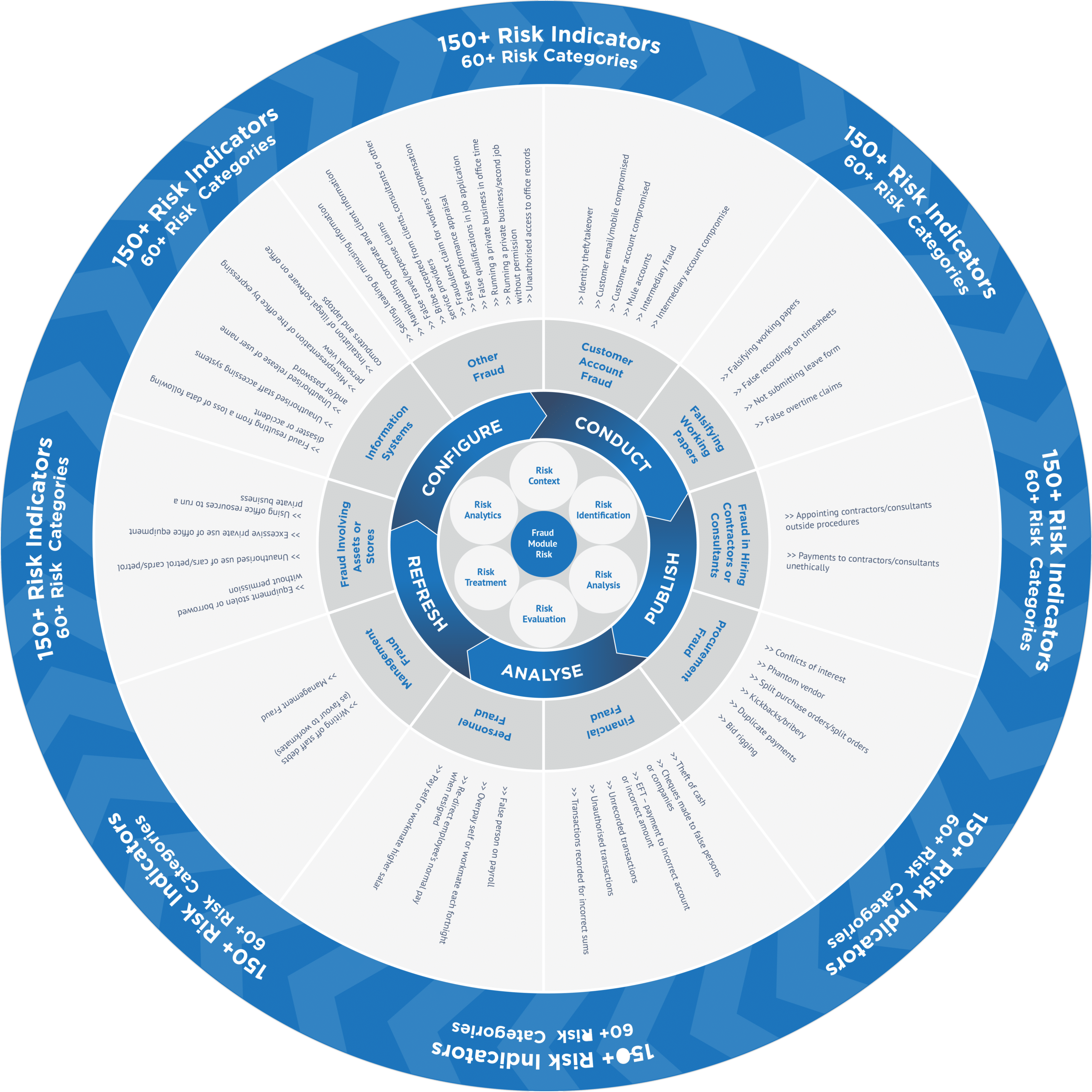
FRAUD WHEEL-v2

Download our Fraud Risk and Control Module Brochure

Click on the button to download the Fraud Risk and Control Module Brochure

COMPLETE THE FORM

Access the Content Module Overview

The content module overview provides an introduction to fraud and outlines the necessity and methods for its implementation.

Additionally, it presents the Arctic Intelligence Risk Assessment Platform, highlighting its potential advantages for your business.

Request your free copy now!
fraud modules